for a story using this exact keyword.
She had finally found a love that didn't ask her to choose. Because with Samir, she had taught him the secret she had always known: The heart doesn't have a finite capacity. It expands. There is always room for one more creature, one more kindness, and one more soul who understands that the truest romance is simply saying, “I see your whole wild world, and I am not afraid to live in it.”
When a woman has a psychic link with an animal, it raises fascinating questions for a romantic storyline:
To help tailor this content or explore specific angles, let me know:
A recent trend in TikTok romances (BookTok) features the line: "He didn't just love me; he loved my cat." This is the modern fairy tale. It acknowledges that for many women, their animal is their first true love. It taught them about loss, about unconditional presence, and about the necessity of routine care. A man who disrupts the cat’s feeding schedule is a villain. A man who buys a new brand of food because the store was out of the usual, just to make sure the cat doesn't stress? That is the hero.
Later, lying on a bed of straw, with Thunder nickering softly below and Barnaby the badger snuffling at her boot, Samir whispered, “I’m not asking you to love me less than them. I’m asking you to let me be part of the herd.”
Whether it is the myth of Leda and the Swan, the fairy tale of Beauty and the Beast , or modern interpretations involving shapeshifters and wildlife, the intersection of women, animals, and romantic storylines serves as a fascinating mirror for societal views on femininity, masculinity, and the nature of love itself.
In contemporary romance (books like The Unhoneymooners or Attachments ), we see the rise of the veterinary professional or the shelter volunteer. This is the "competence trope." She isn't magical; she is practical. She cleans wounds, administers shots, and knows the exact amount of dewormer needed for a stray kitten.
For a year, she was alone. But not lonely. There was , the three-legged badger who snored in her laundry basket. And Kiko , the chatty cockatoo who mimicked her laugh. And Thunder , the ancient draft horse who rested his massive head on her chest when she cried. These relationships sustained her. They taught her that love wasn't about being chosen above others, but about showing up, day after broken day.
In fiction, an animal often acts as a mirror for a female protagonist's true emotional state. While a character might mask her vulnerability, grief, or fear from her human love interest, she cannot hide from her animal companion. Reflecting the Unspoken
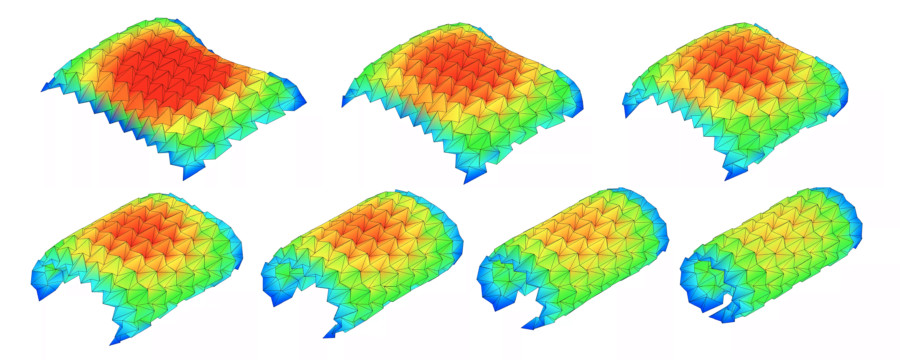
STRAIN VISUALIZATION
Cauchy strain or engineering strain is a unitless measurement of how much a material is being stretched or compressed under load.
The Strain Visualization illustrates the strain across an origami sheet by mapping it to a color from blue (no strain) to red (max strain).