Where 3d Roadkill Incest Hot • Premium
Successful family dramas externalize these internal systems. We do not merely hear about a character’s low self-esteem; we witness a family dinner where that character is systematically silenced, mocked, or ignored.
If we consider the possibility that the topic is related to a work of fiction or an art project, it's worth exploring the themes that such a piece might address. For instance, it could be a commentary on the consequences of isolation, the blurring of boundaries, or the exploration of taboo subjects.
This dynamic often revolves around control, unmet expectations, and generational divides.
Here is a comprehensive guide to building complex family relationships and gripping dramatic storylines in your fiction. 1. The Core Dynamics of Family Complexity where 3d roadkill incest hot
How like Blender or SFM changed internet fan culture.
The phrase represents a highly specific, niche crossover segment within the broader world of adult 3D animation, digital art subcultures, and edgy internet humor. To understand what this string of keywords represents, it is necessary to break down its individual components and look at how independent creators use advanced rendering software to serve fringe digital markets.
For those seeking to generate their own family drama storylines, consider the following scenario seeds: Successful family dramas externalize these internal systems
: Characters fleeing messy lives only to be drawn back by a death or a transformative event, such as an accidental marriage or inheriting a hotel. The Found Family
: Groups of people who are not related by blood but form deep, loyal bonds through shared trauma or experience. Complex Relationship Dynamics
At the heart of every great family drama lies a fundamental truth: families are systems. In family systems theory, introduced by psychiatrist Murray Bowen, individuals cannot be understood in isolation from one another. The family is an emotional unit, where a change in one person’s behavior inevitably sparks a ripple effect across the entire collective. For instance, it could be a commentary on
The best complex family relationships teach us that maturity is not about escaping your family. It is about seeing them clearly—their flaws, their wounds, their desperate love—and choosing how to relate to them anyway. The drama ends not when the fighting stops, but when someone finally says, "I see you. Not the idea of you. Not the parent I needed. You." And then, impossibly, chooses to stay.
Why do audiences endure the discomfort of family drama? Unlike procedural crime shows, family dramas rarely offer justice. The abuser does not always apologize. The inheritance is squandered. The reconciliation dinner ends with a thrown dish.


 fy_pool_day
 gg_carnage
 gg_aztecplace
![SECTOR.BG GUNGAME 18+ [Combos] | CS 1.6 boost server | Italy](https://ipdata.co/flags/it.png)


 cs_assault
![[HIDE-CS.EU] GunGame [24/7|FUN|XP] | CS 1.6 boost server | Lithuania](https://ipdata.co/flags/lt.png)
![CS BOOST 1.6 [HIDE-CS.EU] GunGame [24/7|FUN|XP]](https://www.csboost.eu/lgsl/lgsl_files/maps/halflife/cstrike/gg_toycarpark.jpg) gg_toycarpark
gg_toycarpark
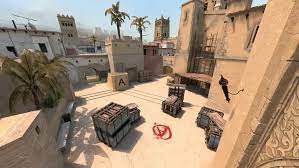
 de_dust2