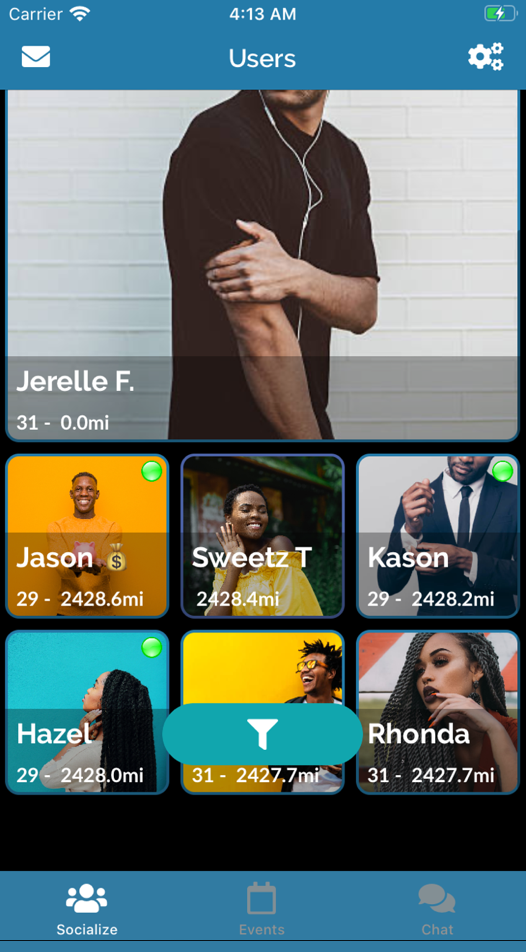
Locals To Meet

: Recent checks indicate the site is currently down for most users.
On July 19, 2007, eBook3000 suddenly went offline. The website's homepage displayed a brief message stating that the site was "down for maintenance." However, the site remained offline, and no further updates were provided. The sudden disappearance of eBook3000 sparked intense speculation among users and the online community.
But for publishers like Penguin Random House, HarperCollins, and Elsevier, Ebook3000 was not a library. It was a multi-million dollar heist. what+happened+to+ebook3000
Today, as students and researchers turn to VPNs, dark web mirrors, and decentralized protocols to find the materials they need, Ebook3000 remains a ghost. It serves as a reminder that in the digital underground, you either adapt to the new technologies of privacy, or you become a footnote in the history of the copyright wars.
But the publishing industry had evolved. They stopped suing individual downloaders (bad PR) and started targeting the infrastructure. : Recent checks indicate the site is currently
While the operators of Ebook3000 rarely issued public statements, the site's decline and ultimate displacement mirror the trajectory of other major digital piracy hubs. Several interrelated factors explain what happened to the platform: ⚖️ Aggressive Copyright Enforcement and DMCA Takedowns
Users looking for free, legal, or more stable book resources have largely migrated to other platforms: Legal Libraries Project Gutenberg Today, as students and researchers turn to VPNs,
The first cracks began to show around 2015-2017. This period marked a global crackdown on digital piracy, spearheaded by powerful publishing conglomerates like Penguin Random House, Hachette, and Elsevier. The legal weapon of choice was the DMCA (Digital Millennium Copyright Act), used not just to remove individual files but to target the entire search infrastructure of pirate sites. Major search engines like Google began de-indexing Ebook3000’s domains, making the site invisible to casual users. More critically, domain registrars—pressured by the publishing industry’s legal muscle—began seizing domain names. Ebook3000 started a frantic game of whack-a-mole, migrating from .com to .org to .net to obscure country-code domains like .cc and .in . Each move cost it casual users and advertising revenue.
: Recent checks indicate the site is currently down for most users.
On July 19, 2007, eBook3000 suddenly went offline. The website's homepage displayed a brief message stating that the site was "down for maintenance." However, the site remained offline, and no further updates were provided. The sudden disappearance of eBook3000 sparked intense speculation among users and the online community.
But for publishers like Penguin Random House, HarperCollins, and Elsevier, Ebook3000 was not a library. It was a multi-million dollar heist.
Today, as students and researchers turn to VPNs, dark web mirrors, and decentralized protocols to find the materials they need, Ebook3000 remains a ghost. It serves as a reminder that in the digital underground, you either adapt to the new technologies of privacy, or you become a footnote in the history of the copyright wars.
But the publishing industry had evolved. They stopped suing individual downloaders (bad PR) and started targeting the infrastructure.
While the operators of Ebook3000 rarely issued public statements, the site's decline and ultimate displacement mirror the trajectory of other major digital piracy hubs. Several interrelated factors explain what happened to the platform: ⚖️ Aggressive Copyright Enforcement and DMCA Takedowns
Users looking for free, legal, or more stable book resources have largely migrated to other platforms: Legal Libraries Project Gutenberg
The first cracks began to show around 2015-2017. This period marked a global crackdown on digital piracy, spearheaded by powerful publishing conglomerates like Penguin Random House, Hachette, and Elsevier. The legal weapon of choice was the DMCA (Digital Millennium Copyright Act), used not just to remove individual files but to target the entire search infrastructure of pirate sites. Major search engines like Google began de-indexing Ebook3000’s domains, making the site invisible to casual users. More critically, domain registrars—pressured by the publishing industry’s legal muscle—began seizing domain names. Ebook3000 started a frantic game of whack-a-mole, migrating from .com to .org to .net to obscure country-code domains like .cc and .in . Each move cost it casual users and advertising revenue.
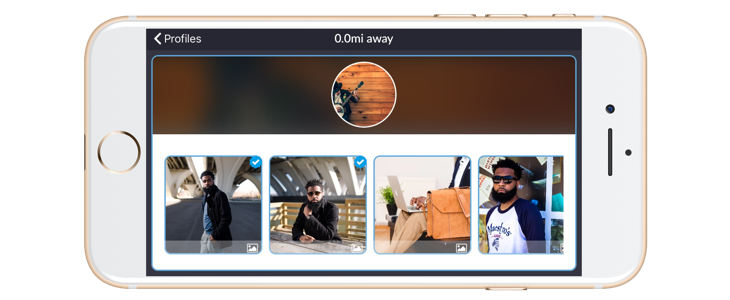
Our team works around the clock to not only ensure that the profiles you interact with are real, and that all media uploaded is authentic. We've introduced a convenient process to allow users to verify there media in 3 steps to keep credibility.
Select any previously uploaded videos or images that you would like to verify.
Using your device's camera; take a photo or record a video of yourself. Videos are preferred as they provide more accuracy during the verification process.
Tap done to submit your media to Mako. The team will review and process your request typically within 24 hours. A notification will be sent to you when this is complete. For all approved media, a blue check will appear next to it them.
First question is about Riga's availability on markets?
Riga was developed for both major mobile platforms to be able to serve as many users as possible. It wasn't easy and it required a lot of development time but now people from all over the world can enjoy the app.
Second question is about the reason of being for Riga and what sparked this awesome software project?
It all started with one of those days when everything goes wrong and you feel at the end of your patience. At the end of one of this type of days, the founder came up with the idea of building an app that would help him get by.
Third question is about some of the app's features?
Every feature was carefully planned and introduced only after debating the idea with all team members and getting their complete approval. The testing department did a great job in making sure everything works like a charm.
Riga also automatically collects and information
Including the activities you perform on our Website, the Platforms, and the Applications, the type of hardware and software you are using (for example, your operating system or browser), and information obtained from cookies.
For example, each time you visit the Website or otherwise use the Services, we collect your IP
Browser and device type, access times, the web page from which you came, the regions from which you navigate the web page, and the web page(s) you access (as applicable). When you first register for a Riga account and enjoy.
The geographic area where you use your computer
Your full name, username, and email address and other contact details. A unique Riga user ID (an alphanumeric string) which is assigned to you upon registration. Other optional information as part of your account profile.
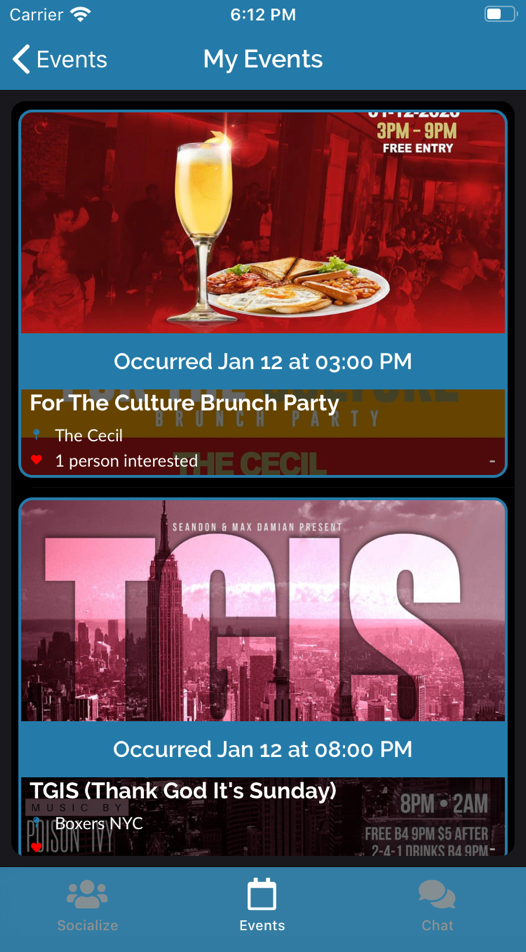
Check out some of the events happening on Mako Now!
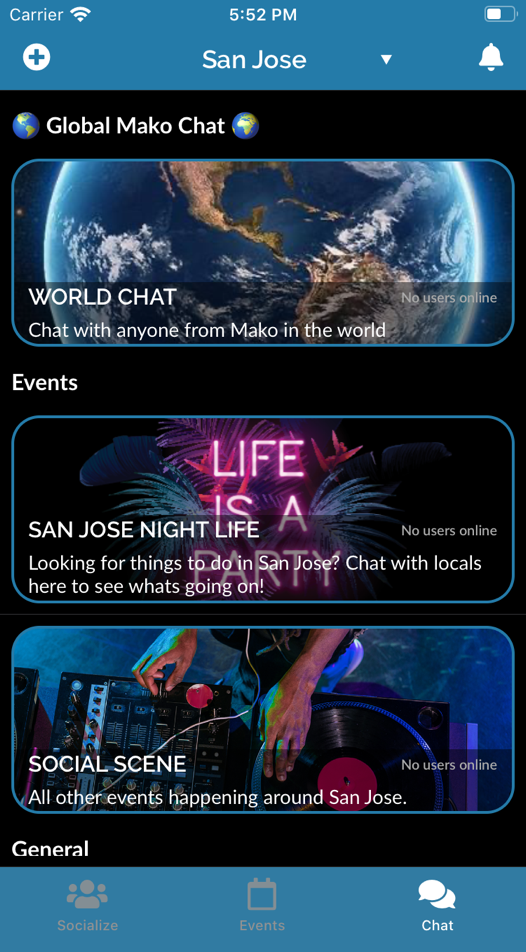
Locals To Meet
Good Reviews
Active Events
Mako is app focused on the quality of our users and content; so we take privacy and security seriously. Check out our Terms & Conditions and Privacy Policy to get more details.
DownloadBusiness management app to improve your operational flow and increase revenues. Download now and enjoy.
This is a great app which can help you save time and make your live easier. You should definitely give it a try.
| Responsive layout | |
| Distinctive CTAs | |
| Image gallery slider | |
| Contact forms | |
| FontAwesome icons | |
| Well-structured code |
Get in shape quickly with the exercise plans provided by our fitness mobile app. Download now and enjoy.
This is a great app which can help you save time and make your live easier. You should definitely give it a try.
| Responsive layout | |
| Distinctive CTAs | |
| Image gallery slider | |
| Contact forms | |
| FontAwesome icons | |
| Well-structured code |
Start to save for rainy days. This app will help you save money on the long run. Download now and enjoy.
This is a great app which can help you save time and make your live easier. You should definitely give it a try.
| Responsive layout | |
| Distinctive CTAs | |
| Image gallery slider | |
| Contact forms | |
| FontAwesome icons | |
| Well-structured code |
Find the best accommodation, health insurance and transportation for your trip. Download now and enjoy.
This is a great app which can help you save time and make your live easier. You should definitely give it a try.
| Responsive layout | |
| Distinctive CTAs | |
| Image gallery slider | |
| Contact forms | |
| FontAwesome icons | |
| Well-structured code |
Use the contact form to send us your message or drop by to meet us over a cup of coffee at our office headquarters.
Copyright 2018 © 8th Court Technologies, L.L.C