

Gmsh is an open source 3D finite element mesh generator with a built-in CAD
engine and post-processor. Its design goal is to provide a fast, light and
user-friendly meshing tool with parametric input and flexible visualization
capabilities. Gmsh is built
around four modules
(geometry, mesh, solver and post-processing), which can be controlled with
the graphical user
interface, from
the command
line, using text files written in Gmsh's
own scripting
language (.geo files), or through the C++, C, Python, Julia and
Fortran application
programming interface.
See this general presentation for a high-level overview of Gmsh and the reference manual for the complete documentation, which includes the Gmsh tutorial. The source code repository contains the tutorial source files as well as many other examples.
Gmsh is distributed under the terms of the GNU General Public License (GPL):
pip install
            --upgrade gmsh
'
Make sure to read the tutorial and the FAQ before sending questions or bug reports.
git clone
          https://gitlab.onelab.info/gmsh/gmsh.git
'
pip install -i https://gmsh.info/python-packages-dev
        --force-reinstall --no-cache-dir gmsh
' (on Linux systems without
X windows, use python-packages-dev-nox instead of
python-packages-dev)
If you use Gmsh please cite the following reference in your work (books, articles, reports, etc.): C. Geuzaine and J.-F. Remacle. Gmsh: a three-dimensional finite element mesh generator with built-in pre- and post-processing facilities. International Journal for Numerical Methods in Engineering 79(11), pp. 1309-1331, 2009. You can also cite additional references for specific features and algorithms.
Please report all issues
on https://gitlab.onelab.info/gmsh/gmsh/issues.
Gmsh is copyright (C) 1997-2022 by C. Geuzaine and J.-F. Remacle (see the CREDITS file for more information) and is distributed under the terms of the GNU General Public License (GPL) (version 2 or later, with an exception to allow for easier linking with external libraries).
In short, this means that everyone is free to use Gmsh and to redistribute it on a free basis. Gmsh is not in the public domain; it is copyrighted and there are restrictions on its distribution (see the license and the related frequently asked questions). For example, you cannot integrate this version of Gmsh (in full or in parts) in any closed-source software you plan to distribute (commercially or not). If you want to integrate parts of Gmsh into a closed-source software, or want to sell a modified closed-source version of Gmsh, you will need to obtain a commercial license: please contact us for details.
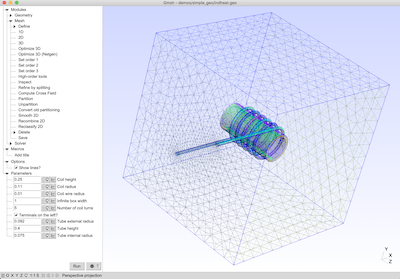
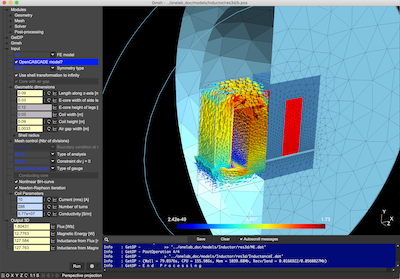
These are two screenshots of the Gmsh user interface, with either the light or dark user interface theme. See the ONELAB web site for more.
This comprehensive guide covers everything you need to know about downloading, installing, and utilizing POS Printer Test V3.2 to keep your receipt printers running flawlessly. What is POS Printer Test V3.2?
POS Printer Test V3.2 is a lightweight, Windows-based desktop application. It allows hardware technicians and business owners to communicate directly with POS printers independently of their primary Point of Sale software.
The is a small but mighty tool in the arsenal of any business owner or IT support professional working with POS systems. By understanding how to find, install, and use this utility, you can quickly diagnose connection problems, configure network settings, and ensure your receipt printers are always ready for business. Remember to always download these tools from official manufacturer sources, follow the step-by-step guide, and use the troubleshooting tips to resolve common issues. With the right approach, you can minimize printer downtime and keep your business running smoothly.
Once the application interface is open, follow these steps to verify your hardware is functioning correctly: pos printer test v3.2 download
Test the automatic paper cutter mechanism.
The download was quick—a lightweight zip file that felt like a digital toolbox. As he ran the executable, the interface was clean and no-nonsense. He selected the COM3 port, set the baud rate, and clicked "Identify Device."
Uploads and prints store logos to test the printer's non-volatile memory chips. Why You Need to Download POS Printer Test V3.2 This comprehensive guide covers everything you need to
While is legendary, it has limitations. It cannot handle Bluetooth pairing or USB virtual COM ports on ARM-based systems (like some modern Android POS terminals).
Always prioritize downloading the utility from the official website of your specific printer manufacturer (such as Xprinter, Rongta, or Hoin). They bundle this tool within their official "Downloads" or "Support" sections alongside the printer drivers. Avoid unverified forums or sketchy file-sharing blogs. Step 2: Verify the File Archive
The POS Printer Test v3.2 software offers the following features: It allows hardware technicians and business owners to
Once you've downloaded the software, follow these steps to install it:
Common ESC/POS-compatible brands (e.g., Epson TM series, Star Micronics, Bixolon, Rongta). Compatibility depends on driver/connection type.
Make sure your POS printer is connected to your computer (via USB, Serial, or Ethernet) and is powered on. Load a roll of thermal paper to see the print results.
: Provides access to printer density adjustments, IP address/Subnet Mask setup for network printers, and Bluetooth settings.
: Enables testing of different font densities , barcodes , and the downloading of NV Logos (bitmaps stored on the printer).